Best Shure Microphone for Vocals: Top Picks for Studio Quality
The Shure SM7B is widely considered the best Shure microphone for vocals, offering exceptional clarity and warmth for a variety of singing styles due to its wide-range frequency response and robust build. This guide explores several Shure microphones, helping you choose the ideal model for your vocal recording needs, whether in a professional studio or a home setup.
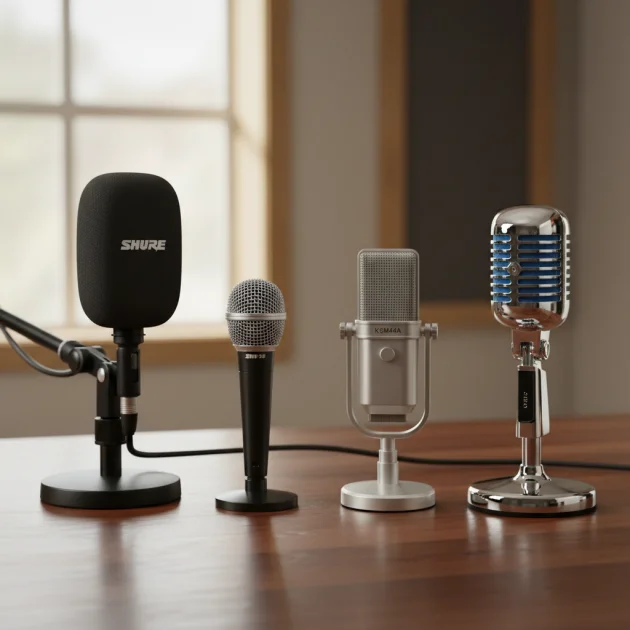
Quick Comparison
| Model | Type | Polar Pattern | Frequency Response | Price Range |
|---|---|---|---|---|
| Shure SM7B | Dynamic | Cardioid | 50 Hz – 20 kHz | $$$$ |
| Shure KSM32 | Condenser | Cardioid | 20 Hz – 20 kHz | $$$ |
| Shure MV7 | Dynamic (USB/XLR) | Cardioid | 50 Hz – 16 kHz | $$ |
| Shure SM58 | Dynamic | Cardioid | 50 Hz – 15 kHz | $ |
What Vocals Need from a Microphone
Vocal recordings demand a microphone that accurately captures the nuances of the human voice. Key considerations include frequency response, which should be broad enough to reproduce both the low rumble and high-end sparkle of a vocal performance. A microphone with a flat frequency response is often preferred for its natural sound, allowing for more precise mixing later. Dynamic microphones are robust and handle high sound pressure levels well, making them suitable for powerful singers, while condenser microphones offer greater sensitivity and detail, ideal for subtle vocal performances. The polar pattern, typically cardioid, is crucial for rejecting off-axis sound and focusing on the singer’s voice, minimizing room reflections and background noise. Additionally, a good microphone for vocals should have low self-noise to ensure clean recordings, especially during quiet passages. Durability and a reliable build are also important, particularly for microphones used frequently in various settings.
Detailed Reviews
Shure SM7B
The Shure SM7B is a legendary dynamic microphone, renowned for its smooth, warm vocal reproduction. Its wide-range frequency response and excellent shielding against electromagnetic hum make it a favorite in broadcast and music studios worldwide. The SM7B features a robust build and an internal air suspension shock isolation system, effectively eliminating mechanical noise. It also includes a detachable close-talk windscreen and a switchable bass roll-off and mid-range emphasis (presence boost) EQ, allowing for tailored vocal tones. This microphone requires a high-gain preamp to perform optimally, delivering a rich, detailed sound that sits well in any mix. Its ability to handle high SPLs without distortion makes it versatile for various vocalists, from soft spoken word to powerful rock singers. The SM7B’s consistent performance and iconic sound profile solidify its position as a top choice for professional vocal recording.
Shure KSM32
The Shure KSM32 is a side-address, large-diaphragm condenser microphone designed for critical studio recording applications. It offers an extended frequency response and a neutral sound reproduction, capturing vocals with exceptional clarity and detail. The KSM32 features a Class A transformerless preamplifier circuit, which eliminates crossover distortion for improved linearity across the full frequency range. Its internal shock mount reduces handling noise, and the integrated three-stage pop filter minimizes plosives. With a switchable 15 dB attenuation pad, it can handle high sound pressure levels, making it suitable for both delicate and powerful vocal performances. The KSM32’s consistent cardioid polar pattern provides excellent off-axis rejection, ensuring focused vocal capture. This microphone is an excellent choice for vocalists seeking a transparent and accurate representation of their voice, offering studio-grade performance at a competitive price point.
Shure MV7
The Shure MV7 is a hybrid USB/XLR dynamic microphone, offering versatility for both professional and home studio users. Inspired by the legendary SM7B, the MV7 delivers a rich, broadcast-quality sound with a focus on vocal clarity. Its dual USB and XLR outputs allow for direct connection to computers or professional audio interfaces, providing flexibility for various recording setups. The MV7 features Shure’s Voice Isolation Technology, which prioritizes the user’s voice and eliminates background noise, making it ideal for untreated recording environments. It also includes an intuitive touch panel for controlling gain, headphone level, monitor mix, and muting. The ShurePlus MOTIV app provides additional control over EQ, compressor, and limiter settings, allowing users to fine-tune their sound. For vocalists seeking a high-quality, user-friendly microphone that performs well in diverse settings, the MV7 is an outstanding option.
Use Cases
The choice of Shure microphone for vocals often depends on the specific recording environment and vocal style. For professional studio recording of powerful rock or pop vocals, the Shure SM7B excels due to its robust build and ability to handle high sound pressure levels without distortion, delivering a warm, broadcast-ready sound. For nuanced, detailed vocal performances in a treated studio, the Shure KSM32 condenser microphone offers superior sensitivity and a flat frequency response, capturing every subtle inflection. Home studio users or podcasters who need a versatile and easy-to-use microphone will find the Shure MV7 ideal, with its dual USB/XLR connectivity and built-in voice isolation technology, ensuring clear vocals even in less-than-perfect acoustic spaces. The Shure SM58, while primarily a live performance microphone, can also serve as a reliable and durable option for demo vocals or practice sessions where budget is a primary concern.
FAQs
What makes the Shure SM7B so popular for vocals?
The Shure SM7B’s popularity for vocals stems from its ability to deliver a consistently warm, clear, and professional sound. Its robust construction, excellent rejection of ambient noise, and built-in pop filter make it forgiving in various recording environments. The microphone’s flat, wide-range frequency response, coupled with switchable EQ options, allows it to capture a diverse range of vocal tones effectively. Many professional artists and broadcasters rely on the SM7B for its reliable performance and iconic sound quality, making it a benchmark for vocal recording.
Is a condenser or dynamic Shure microphone better for vocals?
Neither a condenser nor a dynamic Shure microphone is inherently better for vocals; the optimal choice depends on the specific vocal style and recording environment. Condenser microphones like the Shure KSM32 offer greater sensitivity and detail, making them ideal for capturing subtle nuances in treated studio settings. Dynamic microphones, such as the Shure SM7B, are more robust and handle high sound pressure levels well, making them suitable for powerful vocalists or untreated rooms.
Can the Shure MV7 be used for professional studio recording?
Yes, the Shure MV7 can be used for professional studio recording, especially for home studios or situations requiring versatility. Its dual USB/XLR outputs provide flexibility for connecting to computers or professional audio interfaces. The MV7’s Voice Isolation Technology helps eliminate background noise, ensuring clear, broadcast-quality vocals even in less-than-ideal acoustic spaces, making it a strong contender for various professional applications.
What is the frequency response of the Shure SM7B?
The Shure SM7B has a frequency response of 50 Hz to 20 kHz. This wide range allows it to capture both the low-end warmth and high-end clarity of vocal performances. Its flat frequency response, combined with switchable bass roll-off and mid-range emphasis EQ options, enables users to tailor the sound for different vocal styles and recording needs.
How does the Shure SM58 compare to other Shure vocal microphones?
The Shure SM58 is primarily known as a durable live performance microphone, but it can also be used for demo vocals or practice sessions. Compared to studio-focused microphones like the SM7B or KSM32, the SM58 has a narrower frequency response (50 Hz – 15 kHz) and is less sensitive. While it offers reliability and excellent feedback rejection, it may not capture the same level of detail and nuance as dedicated studio vocal microphones.
Frequently Asked Questions
What makes the Shure SM7B so popular for vocals?
The Shure SM7B's popularity for vocals stems from its ability to deliver a consistently warm, clear, and professional sound. Its robust construction, excellent rejection of ambient noise, and built-in pop filter make it forgiving in various recording environments. The microphone's flat, wide-range frequency response, coupled with switchable EQ options, allows it to capture a diverse range of vocal tones effectively.
Is a condenser or dynamic Shure microphone better for vocals?
Neither a condenser nor a dynamic Shure microphone is inherently better for vocals; the optimal choice depends on the specific vocal style and recording environment. Condenser microphones like the Shure KSM32 offer greater sensitivity and detail, making them ideal for capturing subtle nuances in treated studio settings. Dynamic microphones, such as the Shure SM7B, are more robust and handle high sound pressure levels well, making them suitable for powerful vocalists or untreated rooms.
Can the Shure MV7 be used for professional studio recording?
Yes, the Shure MV7 can be used for professional studio recording, especially for home studios or situations requiring versatility. Its dual USB/XLR outputs provide flexibility for connecting to computers or professional audio interfaces. The MV7's Voice Isolation Technology helps eliminate background noise, ensuring clear, broadcast-quality vocals even in less-than-ideal acoustic spaces, making it a strong contender for various professional applications.
What is the frequency response of the Shure SM7B?
The Shure SM7B has a frequency response of 50 Hz to 20 kHz. This wide range allows it to capture both the low-end warmth and high-end clarity of vocal performances. Its flat frequency response, combined with switchable bass roll-off and mid-range emphasis EQ options, enables users to tailor the sound for different vocal styles and recording needs.
How does the Shure SM58 compare to other Shure vocal microphones?
The Shure SM58 is primarily known as a durable live performance microphone, but it can also be used for demo vocals or practice sessions. Compared to studio-focused microphones like the SM7B or KSM32, the SM58 has a narrower frequency response (50 Hz - 15 kHz) and is less sensitive. While it offers reliability and excellent feedback rejection, it may not capture the same level of detail and nuance as dedicated studio vocal microphones.
Get our weekly buyer guide
Practical specs, not advice. Unsubscribe anytime.
I picked up the Shure SM58 as a backup mic and for live practice, and it’s solid for what it is. It’s built like a tank and handles stage abuse well. However, for studio vocal recording, I found it a bit lacking in detail compared to my condenser mics. It’s great for a budget option or live use, but I wouldn’t make it my primary studio vocal mic if you’re looking for that pristine sound.
The Shure KSM32 is an absolute gem for studio vocals. The clarity and detail it captures are incredible, especially for softer, more nuanced singing styles. I’ve used it on a few different vocalists now, and it consistently delivers a professional, polished sound. It’s a fantastic middle-ground option if the SM7B is out of your budget but you still want top-tier quality.
The Shure MV7 has been a game-changer for my podcast and occasional singing demos. The USB/XLR option is super convenient for my setup, letting me switch between direct computer recording and my audio interface easily. I do wish the frequency response went a little higher for some of the more airy vocal takes, but for the price point, it’s hard to beat the versatility and sound quality.
I finally pulled the trigger on the Shure SM7B after seeing it recommended everywhere, and wow, it lives up to the hype. My vocals sound so much warmer and clearer now, even in my untreated home studio. It really handles my louder singing without any harshness, which was a big problem with my old mic. Definitely worth the investment for serious vocalists.