Best Rode Microphone for Podcasting: A Comprehensive Guide
The Rode Procaster is widely considered the best Rode microphone for podcasting due to its broadcast-quality sound, robust build, and excellent off-axis rejection. This dynamic XLR microphone delivers a rich, full-bodied sound, making it ideal for untreated rooms and professional setups where consistent vocal clarity is paramount.
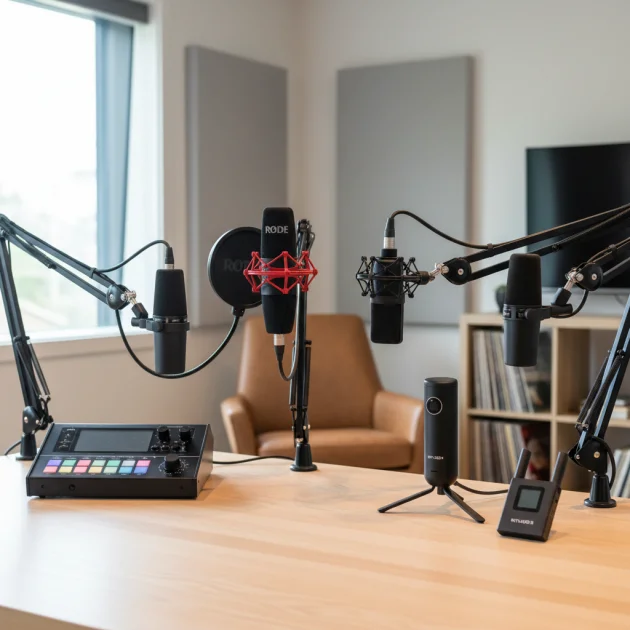
Quick comparison
| Model | Connectivity | Polar Pattern | Price Range | Key Feature |
|---|---|---|---|---|
| Rode Procaster | XLR | Dynamic (Cardioid) | $$$ | Broadcast-quality sound |
| Rode NT-USB+ | USB-C | Condenser (Cardioid) | $$ | Studio-quality USB convenience |
| Rode PodMic | XLR | Dynamic (Cardioid) | $ | Affordable broadcast sound |
| Rode NT1 5th Gen | XLR/USB-C | Condenser (Cardioid) | $$$ | Versatile studio condenser |
What Podcasting needs from a Microphone
Podcasting demands specific microphone characteristics to ensure clear, engaging audio. A good podcasting microphone should offer excellent vocal clarity, minimizing background noise. Dynamic microphones are often preferred for untreated rooms due to their focused pickup patterns, which reject ambient sound effectively. Condenser microphones, while more sensitive, can capture a wider frequency range, ideal for acoustically treated spaces. Connectivity is also crucial; XLR microphones offer professional-grade audio and flexibility with interfaces, while USB microphones provide plug-and-play convenience for beginners. Durability is important for frequent use, and a robust build ensures longevity. Additionally, a microphone with a built-in pop filter or the ability to easily attach one is beneficial for reducing plosives. The microphone’s impedance and sensitivity should also be considered to ensure compatibility with your audio interface or mixer, providing optimal gain staging without introducing unwanted noise. For compare top home on this site.
Detailed reviews
Rode Procaster
The Rode Procaster is a premium dynamic microphone designed specifically for broadcast and podcasting applications. It features a tight cardioid polar pattern, which excels at rejecting off-axis noise, making it perfect for environments that are not acoustically treated. Its internal pop filter effectively minimizes plosives, ensuring clean vocal recordings. The Procaster delivers a rich, full-bodied sound that enhances the spoken word, providing a professional broadcast quality. Constructed from solid metal, it is exceptionally durable and built to withstand rigorous daily use. This XLR microphone requires an audio interface with sufficient gain, such as the Rodecaster Pro, to achieve its full potential. Its frequency response is tailored for voice, offering a clear and present sound without harshness. The Procaster is an investment for serious podcasters seeking top-tier audio performance.
Rode NT-USB+
The Rode NT-USB+ is a high-quality USB condenser microphone that offers studio-grade sound with the simplicity of plug-and-play connectivity. It features a cardioid polar pattern, capturing clear audio directly in front of the microphone while reducing side and rear noise. This microphone is ideal for podcasters who need excellent sound without the complexity of an XLR setup. It includes a built-in pop filter, a desktop tripod, and a ring mount, making it ready to use right out of the box. The NT-USB+ delivers a detailed and natural sound, suitable for a wide range of vocal styles. Its internal analog-to-digital conversion ensures high-resolution audio capture. The headphone jack with zero-latency monitoring is a significant advantage, allowing podcasters to hear their audio in real-time. This microphone is compatible with computers and mobile devices, offering versatility for various recording setups.
Rode PodMic
The Rode PodMic is an affordable dynamic microphone specifically engineered for podcasting. It delivers a broadcast-quality sound profile, characterized by its rich, balanced tone, making voices sound clear and authoritative. The PodMic features an internal pop filter to minimize plosives and an integrated swing mount for easy positioning. Its robust, all-metal construction ensures durability, making it a reliable choice for daily use. With an XLR connection, it pairs perfectly with audio interfaces like the Rodecaster Pro or other mixers. The tight cardioid polar pattern effectively rejects room noise, making it suitable for home studios or less-than-ideal acoustic environments. The PodMic offers exceptional value, providing professional sound quality at an accessible price point, making it an excellent option for new podcasters or those on a budget who still demand high-quality audio.
Routine fit
Choosing the right Rode microphone depends heavily on your podcasting routine and environment. For podcasters recording in untreated rooms or with multiple speakers, the Rode Procaster or PodMic are excellent choices due to their dynamic nature and superior off-axis rejection, minimizing background noise. These microphones are ideal for dedicated home studios or professional setups where consistent vocal clarity is paramount. If you prioritize simplicity and portability, the Rode NT-USB+ is perfect for solo podcasters or those who frequently record on the go, offering studio-quality sound with direct USB connectivity. For versatile use, including music and voice-over, the Rode NT1 5th Gen provides both XLR and USB-C options, adapting to various recording scenarios. Consider your existing equipment, room acoustics, and technical comfort level when integrating a Rode microphone into your workflow.
FAQs
What is the difference between dynamic and condenser microphones for podcasting?
Dynamic microphones, like the Rode Procaster and PodMic, are less sensitive and excel at rejecting background noise, making them ideal for untreated rooms or environments with ambient sound. They are robust and handle high sound pressure levels well. Condenser microphones, such as the Rode NT-USB+ and NT1 5th Gen, are more sensitive, capturing a wider frequency range and finer details. They require phantom power (for XLR models) and are best suited for acoustically treated spaces where their sensitivity can be fully utilized without picking up unwanted room reflections. For podcasting, dynamic microphones often provide a more focused, broadcast-style sound, while condensers offer a more natural, open sound.
Do I need an audio interface for Rode XLR microphones?
Yes, Rode XLR microphones like the Procaster, PodMic, and NT1 5th Gen (when used via XLR) require an audio interface. An audio interface converts the analog signal from the microphone into a digital signal that your computer can understand. It also provides phantom power for condenser microphones and allows you to control gain levels. Popular choices include the Rodecaster Pro, Focusrite Scarlett series, or Universal Audio Volt. A good audio interface is crucial for achieving optimal sound quality and managing your audio input effectively, ensuring your microphone performs at its best.
Can I use Rode USB microphones with my phone or tablet?
Yes, many Rode USB microphones, including the Rode NT-USB+, are designed to be compatible with phones and tablets. You typically need an appropriate adapter, such as a USB-C to USB-A adapter or a Lightning to USB Camera Adapter for Apple devices. This allows for convenient mobile recording, making it easy to podcast on the go or in various locations without needing a full computer setup. Always check the specific microphone’s compatibility and required adapters to ensure a seamless connection and optimal performance with your mobile device.
What accessories are essential for a Rode podcasting microphone?
Essential accessories for a Rode podcasting microphone include a good quality pop filter to reduce plosives (harsh ‘p’ and ‘b’ sounds), a shock mount to isolate the microphone from vibrations and handling noise, and a sturdy desk stand or boom arm for optimal positioning. For XLR microphones, high-quality XLR cables are necessary. If using an XLR microphone, an audio interface is also essential. For USB microphones, a reliable USB cable is key. These accessories collectively enhance sound quality, improve usability, and protect your microphone, contributing to a more professional podcasting experience.
How do I set up my Rode microphone for optimal podcasting sound?
To set up your Rode microphone for optimal podcasting sound, first, position it correctly. For most Rode microphones, speaking directly into the front at a distance of 6-12 inches is ideal. Use a pop filter to prevent plosives. If using an XLR microphone, connect it to an audio interface and adjust the gain to a level where your voice is strong but not clipping. For USB microphones, plug it directly into your computer and select it as the input device in your recording software. Monitor your audio with headphones to catch any issues in real-time. Record in a quiet environment, and consider basic acoustic treatment like blankets or foam panels to reduce echo and reverb.
Verdict
For podcasters seeking the absolute best in broadcast-quality audio, the Rode Procaster stands out as the premier choice, offering unparalleled vocal clarity and noise rejection. However, for those prioritizing convenience without sacrificing significant audio quality, the Rode NT-USB+ provides an excellent plug-and-play solution. The Rode PodMic offers an exceptional balance of performance and affordability, making it a strong contender for budget-conscious podcasters. Ultimately, the best Rode microphone for your podcast depends on your specific needs, recording environment, and budget. Each of these Rode microphones delivers professional-grade sound, ensuring your podcast captivates your audience with clear, engaging audio.
Frequently Asked Questions
What is the difference between dynamic and condenser microphones for podcasting?
Dynamic microphones, like the Rode Procaster and PodMic, are less sensitive and excel at rejecting background noise, making them ideal for untreated rooms. Condenser microphones, such as the Rode NT-USB+ and NT1 5th Gen, are more sensitive, capturing a wider frequency range and finer details, best suited for acoustically treated spaces. For podcasting, dynamic microphones often provide a more focused, broadcast-style sound.
Do I need an audio interface for Rode XLR microphones?
Yes, Rode XLR microphones like the Procaster, PodMic, and NT1 5th Gen (when used via XLR) require an audio interface. An audio interface converts the analog signal to digital, provides phantom power for condenser mics, and allows gain control. Popular choices include the Rodecaster Pro or Focusrite Scarlett series.
Can I use Rode USB microphones with my phone or tablet?
Yes, many Rode USB microphones, including the Rode NT-USB+, are compatible with phones and tablets. You typically need an appropriate adapter, such as a USB-C to USB-A adapter or a Lightning to USB Camera Adapter for Apple devices. This enables convenient mobile recording for podcasting on the go.
What accessories are essential for a Rode podcasting microphone?
Essential accessories include a pop filter to reduce plosives, a shock mount to isolate vibrations, and a sturdy desk stand or boom arm for optimal positioning. For XLR microphones, high-quality XLR cables and an audio interface are necessary. These accessories enhance sound quality and usability.
How do I set up my Rode microphone for optimal podcasting sound?
To optimize sound, position your Rode microphone 6-12 inches from your mouth, speaking directly into the front, and use a pop filter. For XLR mics, connect to an audio interface and adjust gain to a strong but non-clipping level. For USB mics, plug directly into your computer and select it as the input device in your recording software. Monitor with headphones and record in a quiet environment.
Get our weekly buyer guide
Practical specs, not advice. Unsubscribe anytime.
The Rode NT-USB+ is a solid choice for anyone starting out. The USB-C connectivity made setup a breeze, and the studio-quality sound is definitely there. My only minor gripe is that it picks up a little more room echo than I’d like, but for the price point and convenience, it’s hard to beat for quick recording sessions.
I finally pulled the trigger on the Rode Procaster after reading about its off-axis rejection, and it’s been a game-changer for my home studio. My room isn’t perfectly treated, but this mic really cuts down on background noise. The sound quality is incredibly rich and professional, exactly what I needed to elevate my podcast.
I got the Rode PodMic because I was looking for an affordable broadcast sound, and it mostly delivers. It’s built like a tank, which is great, but I found myself needing to boost the gain quite a bit to get a strong signal. It’s a good value, but be prepared to work with your audio interface to get the best out of it.
The Rode NT1 5th Gen is just fantastic. I love the versatility of having both XLR and USB-C options, which makes it super flexible for different recording setups. The condenser quality is pristine, capturing every nuance of my voice. It’s a bit of an investment, but absolutely worth it for the professional results.