The Audio-Technica AT2020 is widely considered the best Audio-Technica microphone for podcasting due to its excellent sound quality, durable build, and accessible price point of $99-$129. This condenser microphone offers clear, detailed sound, making it a top choice for home studio podcasters seeking professional audio without a prohibitive cost. Other models like the ATR2100x-USB and BP40 also cater to different podcasting needs and budgets.
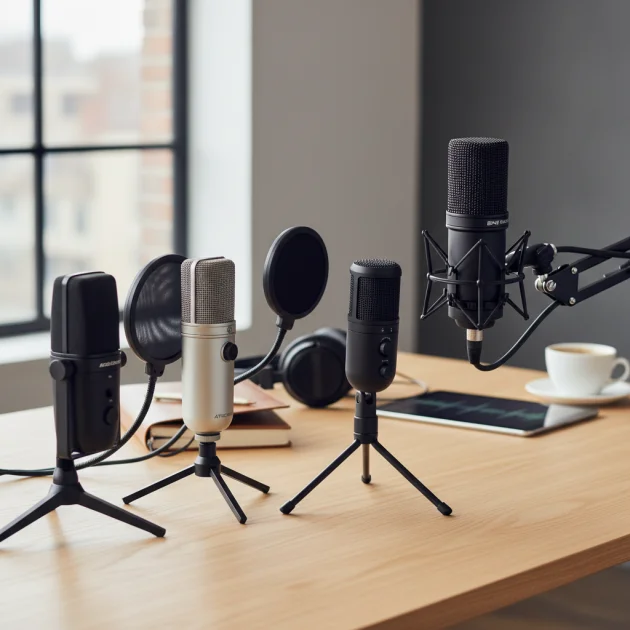
Quick Comparison: Audio-Technica Microphones for Podcasting
| Model | Type | Connectivity | Price Range | Key Feature |
|---|---|---|---|---|
| Audio-Technica AT2020 | Condenser | XLR | $99 – $129 | Clear, detailed sound |
| Audio-Technica ATR2100x-USB | Dynamic | USB/XLR | $79 – $99 | Versatile dual connectivity |
| Audio-Technica AT2005USB | Dynamic | USB/XLR | $69 – $89 | Affordable, robust build |
| Audio-Technica BP40 | Dynamic | XLR | $349 – $399 | Broadcast-quality sound |
What Podcasting Needs from a Microphone
Podcasting demands specific microphone characteristics to ensure professional-sounding audio. Clarity is paramount; listeners expect crisp, intelligible speech without muddiness or distortion. A microphone with a flat frequency response is often preferred, as it accurately captures the human voice without artificial coloration. Durability is another crucial factor, especially for podcasters who travel or frequently set up and tear down their equipment. Microphones built with robust materials can withstand the rigors of regular use.
Connectivity options are also important. XLR microphones offer professional-grade audio quality and flexibility, requiring an audio interface or mixer. USB microphones, conversely, provide plug-and-play convenience, connecting directly to a computer. Some microphones offer both, providing versatility for different recording setups. A good podcasting microphone should also minimize background noise. Microphones with a cardioid polar pattern are excellent for this, as they primarily pick up sound from the front, rejecting sounds from the sides and rear. This helps isolate the speaker’s voice, resulting in cleaner recordings. Finally, ease of use and compatibility with common podcasting software are practical considerations that streamline the recording process.
Detailed Reviews of Audio-Technica Podcasting Microphones
Audio-Technica AT2020
The Audio-Technica AT2020 is a large-diaphragm condenser microphone renowned for its exceptional clarity and detailed sound reproduction. It features a cardioid polar pattern, effectively minimizing off-axis noise and focusing on the speaker’s voice. This makes it an ideal choice for home studio podcasters seeking professional audio quality without a prohibitive price tag. The AT2020 connects via XLR, necessitating an audio interface or mixer, which allows for greater control over gain and other audio parameters. Its robust metal construction ensures durability, making it a reliable tool for long-term use. The microphone’s wide frequency response captures the nuances of the human voice, delivering a rich and natural sound that enhances listener engagement. It comes with a pivoting stand mount, allowing for easy positioning. The AT2020 consistently delivers high-quality audio, making it a staple in many podcasting setups.
Audio-Technica ATR2100x-USB
The Audio-Technica ATR2100x-USB is a highly versatile dynamic microphone, perfect for podcasters who need flexibility in their recording setup. Its standout feature is dual connectivity, offering both USB and XLR outputs. The USB output provides plug-and-play convenience for direct connection to a computer, ideal for beginners or mobile podcasters. The XLR output allows for connection to an audio interface or mixer, providing professional-grade audio and more advanced control. This microphone features a cardioid polar pattern, which helps reduce pickup of unwanted sounds from the sides and rear, ensuring clear vocal recordings. It includes a built-in headphone jack with volume control, enabling direct monitoring of your audio without latency. The ATR2100x-USB is built to be durable, with a metal construction that can withstand frequent use. Its smooth, extended frequency response is tailored for vocal reproduction, making it an excellent choice for interviews, solo podcasts, and live streaming.
Audio-Technica BP40
The Audio-Technica BP40 is a premium large-diaphragm dynamic microphone engineered for broadcast-quality sound. It delivers a rich, warm, and articulate vocal presence, making it an excellent choice for professional podcasters and broadcasters. The BP40 features a hypercardioid polar pattern, which provides superior off-axis rejection compared to a standard cardioid, further minimizing ambient noise and focusing tightly on the speaker’s voice. Its optimized capsule placement helps maintain a commanding vocal presence even at a distance. The microphone incorporates a humbucking coil to prevent electromagnetic interference, ensuring a clean signal. An integrated pop filter effectively reduces plosives, while a switchable 80 Hz high-pass filter helps control unwanted low-end rumble. The BP40 connects via XLR, requiring a high-quality audio interface. Its robust construction and sophisticated internal design justify its higher price point, offering unparalleled audio fidelity and reliability for serious podcasting endeavors.
Routine Fit: Choosing Your Audio-Technica Microphone
Choosing the right Audio-Technica microphone depends heavily on your podcasting routine and environment. For podcasters working in a dedicated, acoustically treated studio, the Audio-Technica AT2020 offers exceptional condenser clarity, capturing every nuance of the voice. Its XLR connectivity integrates seamlessly with professional audio interfaces, providing granular control over sound. Mobile podcasters or those with limited space will find the Audio-Technica ATR2100x-USB invaluable. Its dual USB/XLR output allows for quick setup with a laptop or more advanced use with a mixer, adapting to various recording scenarios. For high-stakes interviews or live broadcasts where pristine audio is non-negotiable, the Audio-Technica BP40 delivers broadcast-grade sound with superior noise rejection. Its robust build and advanced features are ideal for demanding professional environments. Consider your typical recording location, technical comfort level, and budget when selecting the best fit for your podcasting workflow.
FAQs
What is the difference between a condenser and dynamic microphone for podcasting?
Condenser microphones, like the Audio-Technica AT2020, are highly sensitive and capture a wide frequency range with great detail. They require phantom power and are best suited for controlled studio environments where they can pick up subtle vocal nuances. Dynamic microphones, such as the Audio-Technica ATR2100x-USB or BP40, are less sensitive and more robust. They excel at rejecting background noise and are ideal for untreated rooms, live recording, or situations where durability is key. Dynamic mics are generally more forgiving of imperfect acoustics.
Do I need an audio interface for an Audio-Technica podcasting microphone?
If you choose an Audio-Technica microphone with an XLR output, such as the AT2020 or BP40, an audio interface is necessary. An audio interface converts the analog signal from the microphone into a digital signal your computer can understand, and it provides phantom power for condenser microphones. For USB microphones like the ATR2100x-USB, an audio interface is not required as they connect directly to your computer and handle the conversion internally. Some microphones offer both USB and XLR, providing flexibility.
Can I use an Audio-Technica microphone for video calls and streaming?
Yes, many Audio-Technica microphones are excellent for video calls and streaming in addition to podcasting. Models like the ATR2100x-USB, with its convenient USB connectivity, are particularly well-suited for these applications, offering clear audio for virtual meetings, gaming streams, and online content creation. Even XLR microphones, when paired with an audio interface, can provide superior audio quality for any online communication or broadcast, significantly enhancing your presence and professionalism.
How important is the polar pattern for podcasting?
The polar pattern of a microphone is very important for podcasting as it determines how the microphone picks up sound from different directions. A cardioid polar pattern, common in many Audio-Technica podcasting mics, is highly effective because it primarily picks up sound from the front, minimizing background noise from the sides and rear. This helps isolate the speaker’s voice, resulting in cleaner and more focused recordings, especially in less-than-ideal acoustic environments. Hypercardioid patterns offer even tighter focus.
What accessories are essential for an Audio-Technica podcasting setup?
Essential accessories for an Audio-Technica podcasting setup include a sturdy desk stand or boom arm for optimal microphone positioning. A pop filter is crucial for reducing plosive sounds (P’s and B’s) and protecting the microphone capsule. For XLR microphones, a high-quality XLR cable and an audio interface are indispensable. Headphones are also vital for monitoring your audio in real-time, ensuring proper levels and identifying any issues during recording. Acoustic treatment for your recording space, even simple foam panels, can further improve sound quality.
Verdict
Selecting the best Audio-Technica microphone for podcasting involves balancing sound quality, connectivity, and budget. The Audio-Technica AT2020 stands out for its exceptional clarity and value, making it a top choice for dedicated home studios. For versatility and ease of use, the Audio-Technica ATR2100x-USB offers dual USB/XLR connectivity, catering to both beginners and experienced podcasters. Professionals seeking broadcast-grade audio will find the Audio-Technica BP40 delivers unparalleled performance. Each model provides distinct advantages, ensuring that podcasters can find an Audio-Technica microphone that perfectly aligns with their specific recording needs and improves their content’s audio quality.
Frequently Asked Questions
What is the difference between a condenser and dynamic microphone for podcasting?
Condenser microphones, like the Audio-Technica AT2020, are highly sensitive and capture a wide frequency range with great detail, requiring phantom power. Dynamic microphones, such as the Audio-Technica ATR2100x-USB, are less sensitive and more robust, excelling at rejecting background noise and ideal for untreated rooms or live recording. Dynamic mics are generally more forgiving of imperfect acoustics.
Do I need an audio interface for an Audio-Technica podcasting microphone?
If you choose an Audio-Technica microphone with an XLR output, such as the AT2020 or BP40, an audio interface is necessary to convert the analog signal to digital and provide phantom power. For USB microphones like the ATR2100x-USB, an audio interface is not required as they connect directly to your computer. Some microphones offer both USB and XLR, providing flexibility.
Can I use an Audio-Technica microphone for video calls and streaming?
Yes, many Audio-Technica microphones are excellent for video calls and streaming. Models like the ATR2100x-USB, with its convenient USB connectivity, are particularly well-suited for these applications, offering clear audio for virtual meetings, gaming streams, and online content creation. Even XLR microphones, when paired with an audio interface, can provide superior audio quality for any online communication or broadcast.
How important is the polar pattern for podcasting?
The polar pattern of a microphone is very important for podcasting as it determines how the microphone picks up sound from different directions. A cardioid polar pattern, common in many Audio-Technica podcasting mics, is highly effective because it primarily picks up sound from the front, minimizing background noise from the sides and rear. This helps isolate the speaker's voice, resulting in cleaner and more focused recordings, especially in less-than-ideal acoustic environments. Hypercardioid patterns offer even tighter focus.
What accessories are essential for an Audio-Technica podcasting setup?
Essential accessories for an Audio-Technica podcasting setup include a sturdy desk stand or boom arm for optimal microphone positioning. A pop filter is crucial for reducing plosive sounds (P's and B's) and protecting the microphone capsule. For XLR microphones, a high-quality XLR cable and an audio interface are indispensable. Headphones are also vital for monitoring your audio in real-time, ensuring proper levels and identifying any issues during recording. Acoustic treatment for your recording space, even simple foam panels, can further improve sound quality.
Get our weekly buyer guide
Practical specs, not advice. Unsubscribe anytime.
The ATR2100x-USB has been a game-changer for my mobile recording. The dual USB/XLR connectivity is super convenient, letting me record directly to my laptop or through my interface. My only minor gripe is that the included stand feels a bit flimsy, but the mic itself is solid.
Upgrading to the Audio-Technica BP40 was one of the best decisions for my podcast. The broadcast-quality sound is immediately noticeable, and my listeners have even commented on the improved audio. It’s a bit of an investment in the $349-$399 range, but absolutely worth it if you’re serious about your sound.
I picked up the AT2005USB because I needed something affordable and robust for interviews on the go. It’s definitely a good value for the price, and the build quality is decent. However, I’ve noticed it picks up a bit more background noise than I’d like in less-than-ideal recording environments. It’s fine for basic use, but I might upgrade later.
I finally pulled the trigger on the Audio-Technica AT2020 after seeing it recommended everywhere, and I’m so glad I did. The sound quality is incredibly clear and detailed for my home podcast setup. It really does deliver professional audio without breaking the bank, which was my main concern.